culture
The Gaspar Enriquez Community Center Opening
CityBeat Magazine · 1 de diciembre de 2023
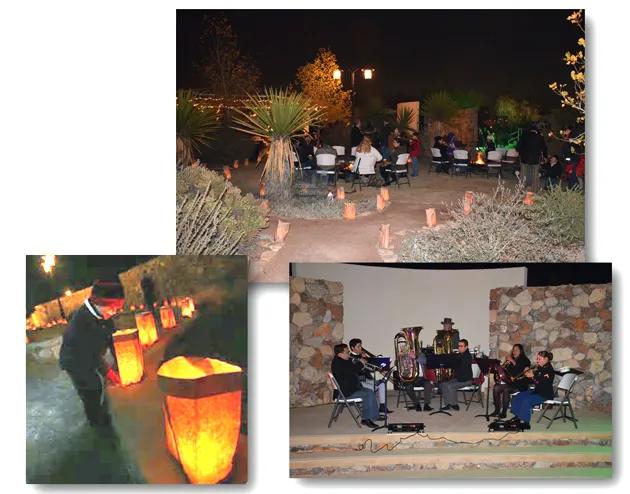
El Paso’s own renowned artist, Gaspar Enriquez, has created art all his life. We were honored to have visited with him to learn about his life, his passion, and talk about the recent opening at his gallery which is now a legacy for UTEP Art students.
Mr. Enriquez’ work graces the walls of the Smithsonian Portrait Gallery. The four pieces exhibited there are portraits of Dr. Diana Natalicio, Luis Jimenez, Rodolfo Anaya, and John Valadez. His work is exhibited all over the country.
His inspiration came from his visits to his abuelitos’ home in Cd. Juarez. He began to draw because there was not much else to do there. He abandoned drawing in his teenage years and moved to California. After several years he started washing dishes in restaurants, became a laborer, and then a machinist. He began earning a good income as a machinist while attending East Los Angeles Junior College. He got married to a girl whose grandmother lived in San Elizario. She also wanted to finish college. They moved to Denton, Texas so that she could finish there. He took a job as a machinist. At his wife’s urging, he started painting again with a Christmas gift he received from her, a case of oil paints. This motivated him to paint during his spare time. They moved back to San Elizario and where he returned to college at UTEP to complete his degree in Art Education. He also holds a Master’s degree from UTEP in Metals Art.
He started teaching as a student teacher with a teacher at Bel Air High School. She was instrumental in getting him a job at Bowie High School in 1971. He felt right at home as this was the neighborhood that he had grown up in. This is where he began his life of art. He started with 7th and 8th graders and moved to teaching high school. Mr. Enriquez added, “I used to talk like them and dress like them, too. I made a piece that the El Paso Museum of Art owns. It’s called a Generation of Attitudes. It is made up of a Pachuco, a Pachuca, a Tirilon and a Tirilona, and a Cholo and a Chola. They are life-size cutouts. Back in the day, I was a Tirilon.”
He defined the people that inspired him, “A Pachuco started in El Paso. It was an identity style. They wore wide pants with high platform shoes. They were known for their nice suits with a wide brimmed hat with a feather in it. They went to California and that is when the Zuit Suit riots started. They became well-known but in a bad way. Zuit Suit riots were a racial war between service men and pachucos.
During World War II a lot of Mexican Americans went to war. When they came back, they came back with their uniforms, khaki pants, and white t-shirt. They couldn’t find work because they were Hispanic. That lasted for a long time. They borrowed a little bit of the pachuco style. Their khaki pants were perfectly starched and ironed. My mother said to me, if you want to starch and iron your pants, you have to do it yourself. There I am ironing my pants. We were pretty proud of our dress. We put creases on our T-shirts and wore a Pendleton shirt, the shirts with squares that you button at the top. We wore tablita shoes that look like a francesito. We also wore a little hat. This was the dress of the Tirilon. My theory is that they got the name from tirantes, or suspenders. We also wore them.
Then the Cholos came around. They borrowed a little from the pachuco and the tirilon styles. They used slang words like ‘shante’ for home and ‘lana’ for money. There was a person from Stanford that wrote a little dictionary for Calo, Spanish barrio and border slang, and its translation into English or Spanish.
Each of these style types borrowed the style, language, and the attitude from each generation before them. You need to have attitude to survive in a barrio, but it also got them into trouble. I started painting them because they symbolized what I used to be. That is why I started painting them. I wanted to record their identity.”
His work started gaining notoriety and was recognized throughout the country. One of those that recognized it was Cheech Marin. He started collecting Mr. Enriquez’ work. Mr. Marin has his own museum in Riverside., California. Mr. Enriquez explained that Cheech’s father was a policeman. He was raised outside of East LA. When he went to Canada to avoid the draft, he became a pottery apprentice. This is where Mr. Marin met Chong.
“Everybody wanted to have an identity because we were just Mexican Americans or Mexicans.
My subjects were my students. There is one painting that was commissioned by the San Antonio Convention Center. They were an installation for a specific part of the convention center but because they didn’t appreciate them. They were putting concession stands in front of them. They didn’t take care of them so when I had my retrospective here, they borrowed them from the convention center. This is good because now they are permanently here so that is why you see them at the museum here. They are huge,” Mr. Enriquez said.
He taught at Bowie High School for thirty-three years, having instructed over 6000 students. His gallery has paintings he did of many of them and their children. One of them even took his place as the art teacher at Bowie. He also shows the work of some of his students who showed both promise and passion for art and now are themselves accomplished and well-known artists.
His gallery was an old winery with vineyards that produced wine for churches all the way to Santa Fe. It later became a residence which belonged to his grandmother’s family. He began restoring the old adobe building in 1997, designing it to look as it had originally. The restoration of the Gaspar Giron Mills building was a labor of love, adobe by adobe. After having moved to San Elizario he found out that his mother had been born there. The gallery was completed in 2007. He restored the other side of the building in 2010.
Mr. Enriquez says he was born Mexican American but choses to be a Chicano. During the Chicano movement in LA, it was a statement that they were individuals. He explained that many Mexican Americans consider it derogatory to be Chicano.
About the recent opening, Mr. Enriquez shared that, “This place was blood, sweat, and tears for me. I did it for the community. I am going to leave it in a Trust through the Paso del Norte Community Foundation. The foundation is going to work with the Rubin Center at UTEP. The Rubin Center will be doing programs for students here and next door for the arts, dance, music, for ecology, all those things combined. They will get students from UTEP to come and do these things here. The Gallery and Museum is now called the Gaspar Enriquez Community Center. This is what the opening was about.”
Currently, there is an exhibit by the De La Torre Brothers. They are from Tijuana and San Diego. They live in both places in the barrio called Guadalupe Community where the wine country is in Baja California.
You are invited to visit the Gaspar Enriquez Community Center Gallery and Museum at 1456 Main Street and be amazed by its beauty, art, and architecture.