events
James Avery Pleasant II: El Paso's Rising Lightweight and the Yokai Revolution
H. Caleb Lara · 19 de abril de 2026
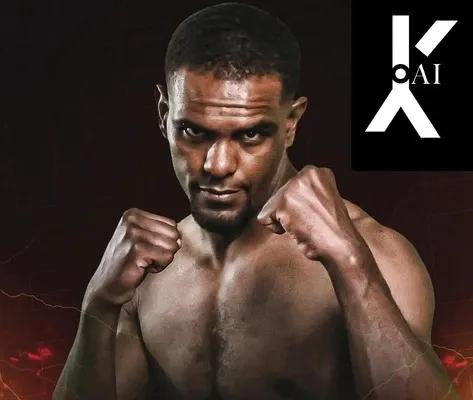
In the competitive landscape of regional MMA, few fighters exemplify the combination of athletic prowess, intellectual discipline, and relentless improvement quite like James Avery Pleasant II. Fighting out of El Paso, Texas, Pleasant has established himself as one of the most dominant lightweights in the Southwest, currently holding a professional record of 7-1-0 and riding an impressive six-fight winning streak. But his story extends beyond the cage—it's a tale of engineering precision applied to combat sports, and of a team built on innovation rather than convention.
The Making of a Fighter
Born on April 4, 1995, Pleasant's fighting journey began long before he ever stepped into a professional cage. A standout wrestler at Franklin High School in El Paso, he developed the foundational grappling skills that would later become his signature in MMA. Standing at an imposing 6'4" for the lightweight division, Pleasant possesses physical advantages that most fighters at 155 pounds simply don't have—a reach that allows him to control distance and a frame that, when properly leveraged, can overwhelm opponents in the clinch and on the ground.
What sets Pleasant apart from many regional fighters is his dual identity as both a professional athlete and an electrical engineer. This isn't merely a backup career; it's a mindset that permeates his approach to fighting. Pleasant analyzes opponents with the same systematic precision he'd apply to circuit diagrams, breaking down tendencies, identifying vulnerabilities, and engineering solutions to complex fighting problems. The result is a fighter who constantly evolves, rarely making the same mistake twice.
Yokai: Where Innovation Meets Combat
Pleasant is a founding member of Yokai, a training collective that has quietly become one of the most intriguing fight teams in the Southwest. At its helm is coach Ari Gamboa, whose unorthodox methods have drawn attention from those paying close attention to the regional circuit. Gamboa isn't interested in producing cookie-cutter fighters who follow predictable game plans. Instead, he pushes his athletes to grow in ways that traditional MMA gyms often overlook.
The philosophy at Yokai centers on constant innovation. While many coaches rely on proven systems—and there's certainly value in that approach—Gamboa encourages his fighters to experiment, to question conventional wisdom, and to develop techniques that opponents won't expect. This methodology has proven particularly effective for Pleasant, whose submission arsenal has become increasingly sophisticated with each fight.
The team's name itself speaks to their approach. In Japanese folklore, yokai are supernatural entities that defy easy categorization—spirits that don't fit neatly into existing frameworks. For Gamboa and his fighters, the name represents their commitment to being unpredictable, to constantly evolving, and to refusing the limitations of conventional fighting wisdom.
A Record That Speaks Volumes
Pleasant's professional record tells a story of a submission specialist who can also knock opponents out when necessary. Of his seven victories, four have come by submission—including d'arce chokes, rear naked chokes, and ezekiel chokes—demonstrating a diverse grappling game that keeps opponents guessing. He's shown finishing ability with a knockout via ground strikes, and the tactical acumen to grind out decision victories when required.
His only professional loss came in August 2023 at LFA 164, where he dropped a split decision to Ilay Barzilay in his hometown of El Paso. That defeat, rather than derailing his career, seemed to sharpen his focus. Since then, Pleasant has reeled off six consecutive victories, each more impressive than the last. He's captured the AFL Lightweight Championship, defended it successfully, and most recently claimed the APFC Lightweight Championship in November 2025 with a third-round rear naked choke victory over Jess Martinez.
The regional rankings reflect his dominance. Pleasant currently sits at #2 among professional lightweights in New Mexico, #8 in the entire US Southwest region, and has cracked the top 100 in North America. For a fighter competing primarily on regional circuits, these rankings represent a legitimate claim to being one of the best lightweights outside the major promotions.
The Gamboa Effect
Coach Ari Gamboa's influence on Pleasant's development cannot be overstated. Gamboa's coaching philosophy rejects the idea that fighters should specialize too early or limit themselves to predetermined styles. Instead, he emphasizes adaptability—the ability to recognize what a particular opponent presents and to counter it effectively. This approach requires fighters to develop broader skill sets than they might at more traditional gyms, but it produces athletes who are difficult to game-plan against.
Gamboa's methods extend beyond technique. He's known for pushing his fighters psychologically, helping them develop the mental resilience that separates good fighters from great ones. In MMA, where the margin between victory and defeat often comes down to who can maintain composure in chaotic moments, this psychological preparation proves invaluable. Pleasant has shown the ability to stay calm when hurt, to adjust mid-fight when plans go awry, and to impose his will during championship rounds—all hallmarks of Gamboa's coaching.
What's Next for Pleasant
At 29 years old, Pleasant is entering what should be his athletic prime. With two regional lightweight titles, a dominant winning streak, and a team that continues to push his development, the question isn't whether he can compete at higher levels—it's when he'll get the opportunity. The LFA has historically served as a proving ground for UFC-caliber talent, and Pleasant's performance on that stage, even in defeat, showed he belongs in that conversation.
For now, Pleasant continues to represent El Paso and Texas with each fight, bringing attention to a regional scene that often goes overlooked by national MMA media. His partnership with Gamboa and the Yokai team suggests his best performances may still be ahead of him. In a sport that rewards innovation and punishes stagnation, Pleasant and Yokai appear to be building something special on the Texas-New Mexico border.
The fighter who walked away from that split decision loss at LFA 164 is not the same fighter who now holds multiple regional championships. He's evolved—exactly as Gamboa's philosophy demands. And if the past two years are any indication, the evolution is far from complete.